Luxury Hospital Beds That Actually Look Like Furniture


We hear the same hesitation from families every single week. The thought of bringing chrome rails into a carefully styled home feels like turning a sanctuary into a hospital ward. Our team understands this completely. You want the clinical safety, but you refuse to sacrifice the dignity of a beautiful bedroom.
Modern medical equipment has finally closed that gap.
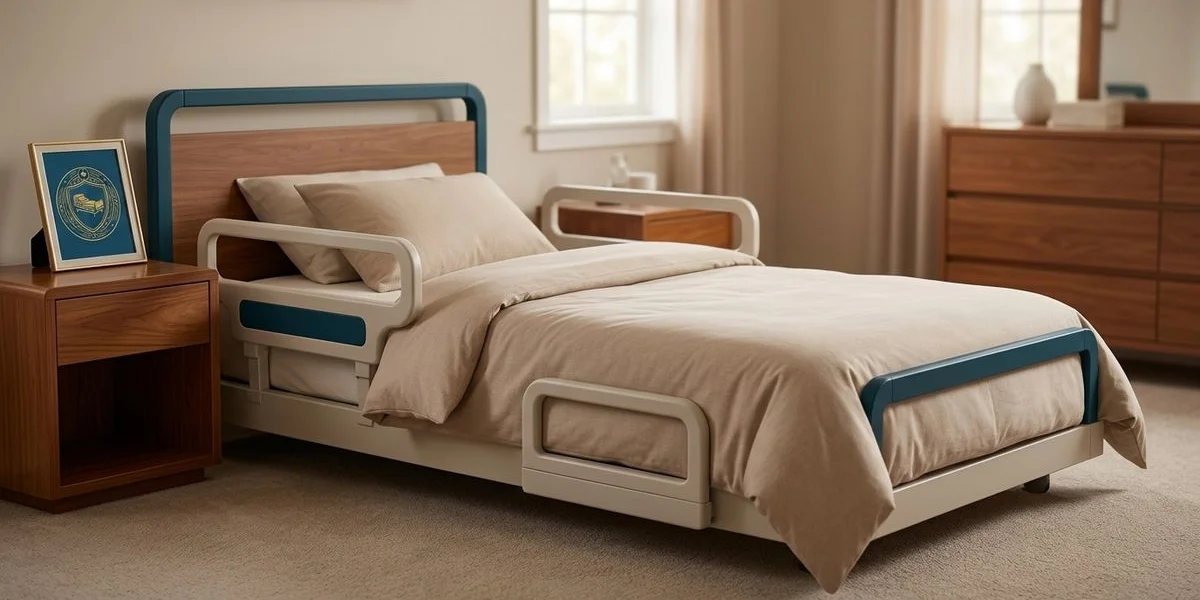
Today’s premium luxury models deliver full functionality inside a package that looks like high-end furniture. We have seen exactly how investing in Luxury Hospital Beds That Actually Look Like Furniture shifts a patient’s entire mindset. This guide breaks down the true cost differences and the exact specifications that matter most.
Why Aesthetics Matter in Home Care
We know that bringing a clinical bed into a primary bedroom changes the entire dynamic of a home. Environmental psychology shows that when a room looks like a hospital, the person feels defined by their condition. Our clients frequently report that institutional equipment creates an atmosphere of illness for both the patient and visiting family members.
The framing shifts entirely when you use a beautifully designed adjustable bed. The person remains at home, in their own space, using discreet tools that support their comfort.
We consider this a critical factor for long-term care situations that may last for years. The demand for aging-in-place solutions has surged in 2026, making aesthetic integration more important than ever. A welcoming environment provides several psychological benefits:
- Preserves personal dignity during vulnerable medical transitions.
- Reduces the anxiety commonly associated with aging in place.
- Creates a warmer, more inviting space for visiting family members.
- Encourages better sleep hygiene by minimizing clinical reminders.
What Defines Luxury Hospital Beds That Actually Look Like Furniture
High-end home hospital beds combine the electric head, foot, and height adjustments of clinical models with design elements borrowed from residential furniture. Brands like Transfer Master and iCare have completely reimagined the user experience.
Our professional service team recommends focusing on specific components that separate a basic medical bed from a luxury centerpiece. Here are the core upgrades to look for.
Custom Wood Finishes
The most visible difference is always the head and foot boards. Standard medical beds use plastic or painted metal end panels that look entirely institutional.
Our preferred luxury models feature integrated wood finishes in styles ranging from classic cherry to contemporary espresso. These wood panels are not just decorative covers.
They provide the same impact resistance as standard medical panels while matching popular interior color palettes. Some beds from SonderCare even offer stain-resistant upholstered finishes for a softer look.
Hidden Caster System
Visible, bulky rubber wheels immediately give away a bed’s medical purpose. A hidden caster system tucks these wheels behind a decorative valance or recesses them into the bed frame.
We love how this design keeps the wheels completely out of sight from a standing height. The bed still moves effortlessly when needed for care or cleaning.
Once locked into place, the unit looks planted and permanent like a regular piece of furniture. This simple change dramatically softens the look of a room.
Whisper-Quiet Motor Technology
Noise is perhaps the most underappreciated quality difference between standard and premium beds. Standard models often produce grinding or clicking sounds that remind everyone in the room they are using medical equipment.
We highly recommend beds equipped with premium European actuators, such as LINAK LA18 IC motors. These advanced sealed linear actuators operate at 35 to 40 decibels, which is quieter than a standard library.
“A whisper-quiet motor is not a luxury option, it is a necessity for maintaining healthy sleep cycles during long-term home recovery.”
Quiet operation matters immensely at night. Small mechanical sounds can easily disrupt sleep for both the patient and their partner. These advanced systems also pack a massive 6,000 Newtons of push force to ensure smooth, stable transitions.
Upholstered Headboards and Safety Features
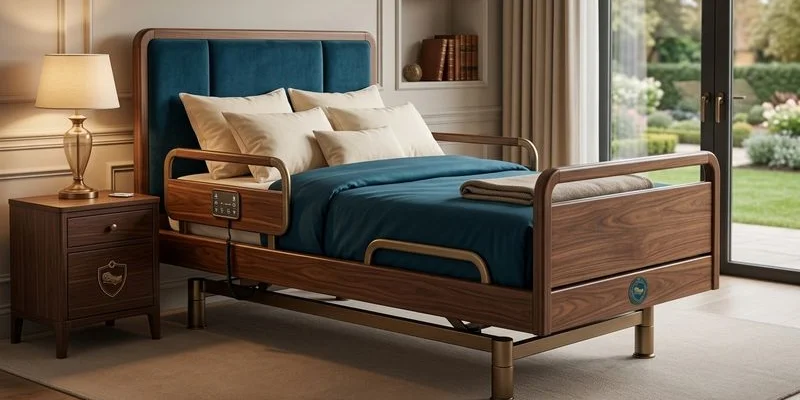
Some luxury lines offer fabric or leather-upholstered headboards that coordinate perfectly with your existing decor. Tufted, channeled, or smooth options provide a wide range of aesthetic choices.
Our favorite models treat these fabrics with heavy-duty antimicrobial protectors so they wipe clean instantly. Premium designs often include multiple visual upgrades:
- Coordinated wood or padded side rails.
- Retractable safety rails that hide completely.
- Matching overbed tables for a cohesive room.
- Color-matched frames that blend with existing bedroom suites.
Standard side rails use utilitarian metal tubes that look completely industrial. Premium beds hide these functional elements to ensure the space remains warm and inviting.
Advanced Ultra-Low Positioning
Functionality in the luxury space goes far beyond basic up and down movements. Many premium beds now feature ultra-low positioning to significantly reduce fall risks.
We often point clients to models with advanced floor-level capabilities. For example, Accora beds equipped with BodyMove technology can lower to just 3.9 inches off the floor.
This extreme low height prevents severe injuries if a patient rolls out of bed. The bed then raises back up to 30 inches to provide an ergonomic, safe working height for caregivers.
Custom-Built Medical Furniture
At the highest end of the market, custom-built medical furniture takes personalization even further. These are beds designed and built to exact specifications.
Our clients can choose the specific wood species, headboard upholstery, rail style, and mattress platform configuration. You can even specify custom dimensions to match your exact room layout. Buyers typically customize the following components:
- Premium wood species and exact stain colors.
- Headboard design and fabric upholstery.
- Safety rail style and finish.
- Extended mattress widths, such as a spacious 48-inch platform.
- Specific motor and actuator capacities.
These custom pieces typically take several weeks to manufacture and require a larger investment. Families willing to invest in a bed that truly integrates with their home’s interior design find the wait completely justified.
Comparing Luxury Beds to Standard Models
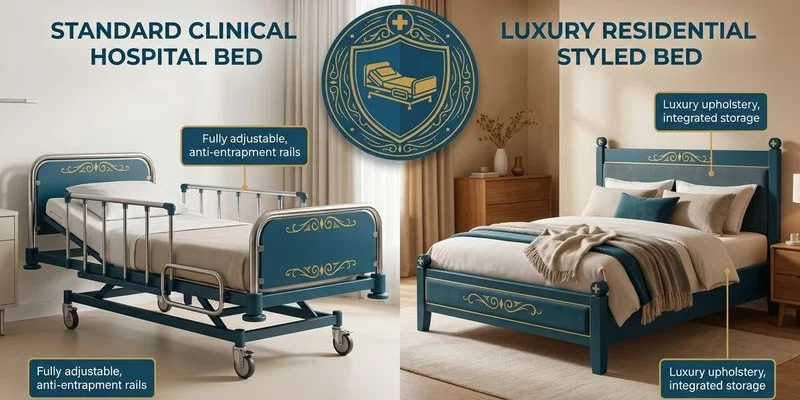
How do luxury beds actually stack up functionally? The functional capabilities are equivalent or noticeably better, particularly regarding safety certifications.
We created this comparison to highlight the exact differences in quality, materials, and 2026 pricing. Notice the stark contrast in motor noise and safety compliance.
| Feature | Standard Hospital Bed | Luxury Hospital Bed |
|---|---|---|
| Head/Foot Adjustment | Semi-electric or manual | Full electric with Zero Gravity |
| Height Adjustment | 15 to 26 inches | 3.9 to 31.5 inches (ultra-low) |
| Weight Capacity | 350 to 450 lbs | 400 to 600 lbs |
| Motor Noise | 45 to 55 dB | 35 to 40 dB (e.g., LINAK) |
| Side Rails | Chrome or plastic tube | Wood, upholstered, or retractable |
| Safety Certification | Basic FDA 510(K) Exempt | IEC 60601-2-52 Hospital Grade |
| Casters | Visible, standard locking | Hidden or fully recessed |
| 2026 Typical Price | $1,000 to $2,500 | $3,000 to $8,999+ |
Popular Luxury Bed Styles
Choosing a medical bed no longer means settling for a sterile, industrial look. Manufacturers now build frames that match specific architectural styles.
Our design consultants help families select finishes that look natural in their specific geographic region. Here are the most popular aesthetics currently on the market.
Traditional and Contemporary Options
Traditional styles feature rich wood tones like cherry and mahogany, complete with turned legs and brass-tone accents. This look suits classic American or colonial home interiors beautifully.
We see high demand for contemporary frames in modern condos and minimalist homes. These beds utilize clean lines, flat-panel headboards, and matte finishes with minimal ornamentation.
Transitional and Coastal Designs
Transitional styling offers a blend of traditional warmth and contemporary simplicity. This is the most versatile option, featuring warm wood with subtle curves and neutral finishes that work in almost any room.
Our Florida clients frequently request coastal designs for their bright, airy homes. These beds use light-toned woods like bleached oak, woven textures, and soft blue accents that perfectly match a seaside aesthetic.
Making the Investment Decision
Premium hospital beds cost two to three times more than standard models. Evaluating whether that premium is worthwhile requires looking at the total cost of ownership over time.
We encourage families to consider a few specific financial and practical factors before making a purchase. The right choice depends heavily on your long-term care plan.
Duration of Use vs. Rental Costs
A standard bed is perfectly adequate and cost-effective if you only need it for a few weeks of post-surgical recovery. However, long-term care fundamentally changes the financial math.
Our analysis of 2026 market data shows that standard rental beds cost between $250 and $400 per month. At $300 a month, your rental fees will surpass the purchase price of a premium bed in roughly 13 to 18 months.
Renting is often the most expensive option available for aging-in-place scenarios. Purchasing a luxury bed pays dividends in daily comfort while capping your total expenses.
Medicare Realities and Patient Psychology
Many families assume insurance will cover the cost of a high-end bed. Under LCD L33820, Medicare explicitly denies coverage for total-electric hospital beds, classifying powered height adjustment as a mere convenience feature.
We know that paying out of pocket is frustrating, but a luxury bed offers immense psychological value. For patients resistant to medical equipment, a bed that looks like furniture can be the difference between acceptance and refusal.
“Upgrading to a residential-style bed frequently eliminates the friction and refusal often associated with bringing medical equipment into a primary bedroom.”
A luxury model retains excellent secondary market value if you ever need to sell it. Well-maintained premium beds often recover 40 to 60 percent of their original purchase price at resale. If you are comparing standard models first, our fully-electric hospital beds provide the same core positioning features at a lower price point.
Seeing Is Believing
Descriptions and photos only go so far when evaluating high-end medical furniture. The real impact is felt when you see it in a room context and experience the quiet operation in person.
Our showroom features premium luxury hospital beds alongside standard models so you can personally see, touch, and compare the differences. You will find multiple styles on display, and the consultation service ensures the final product matches your home’s interior perfectly.
For a broader overview of all specialized bed types, read our bariatric hospital bed guide or visit our complete buying guide. You can also explore the features that matter most for home care.
Stop by our Orlando location today to test these features in person. Your family deserves the perfect Luxury Hospital Beds That Actually Look Like Furniture to balance clinical safety with beautiful design.