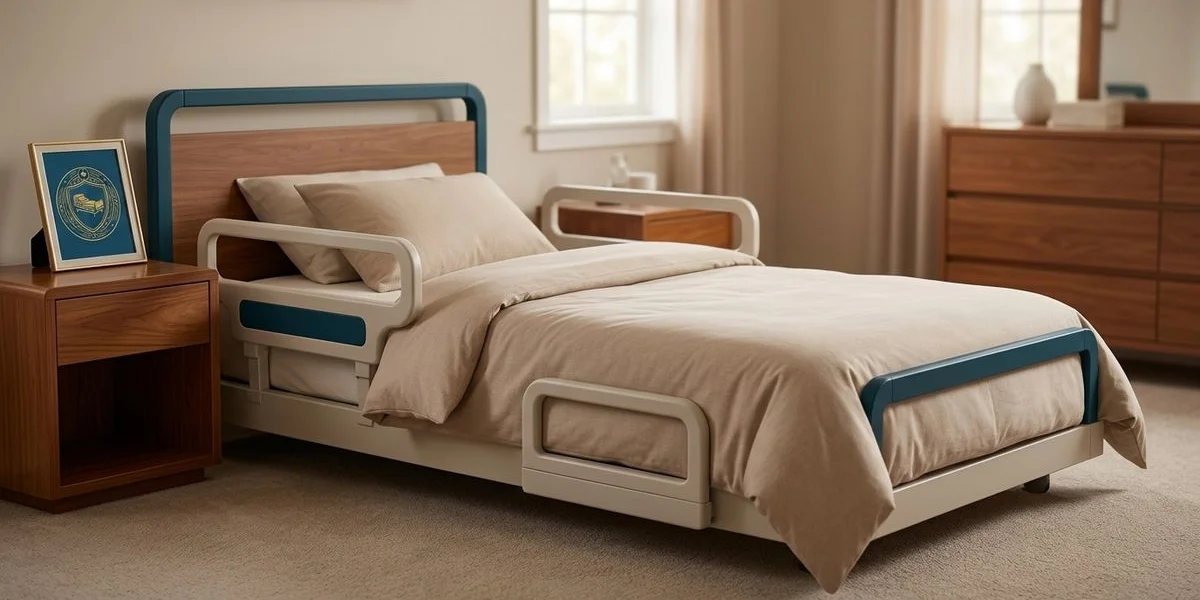
Choosing a Hospital Bed for Alzheimer's and Dementia Care at Home


We know the unique stress that comes with setting up a safe space for someone experiencing cognitive decline.
A standard setup rarely works.
People with dementia are up to five times more likely to fall than other older adults, and the majority of these incidents happen right at home.
Choosing a Hospital Bed for Alzheimer requires a major shift in thinking.
Our team has seen how the right equipment must function as a comprehensive safety system.
You are no longer just buying a piece of furniture for comfort.
This guide covers the specific features, safety considerations, and practical strategies that matter most for cognitive care solutions at home.
Understanding the Unique Risks
Patients with dementia face bed-related risks that other patients simply do not encounter.
Our experience shows that proactive planning prevents the most severe injuries.
Let’s examine the specific challenges you will need to manage.
Unplanned Bed Exits
A patient with Alzheimer’s may attempt to get out of bed at any hour.
They often act without remembering they cannot walk safely or understanding where they are.
Recent 2026 data indicates that nearly 60% of fall-related hospitalizations for dementia patients originate from nighttime wandering.
Our professionals strongly recommend treating the bed itself as the first line of defense.
Unlike a post-surgical patient who knows they should call for help, a dementia patient will simply act on impulse.
Entrapment
Entrapment risk mitigation is critically important for dementia patients.
These individuals may wedge themselves between the mattress and side rails, or in any gap within the bed structure.
They frequently lack the cognitive ability to free themselves or call for help.
The FDA identifies seven distinct zones of entrapment in hospital beds.
The highest danger zones for dementia patients include:
- Zone 1: Within the rail itself.
- Zone 2: Under the bottom of the rail.
- Zone 3: Between the rail and the mattress.
- Zone 4: Under the rail at the ends of the bed.
Our safety assessments routinely find that older standard beds fail current metrics for these specific zones.
Entrapment injuries range from bruising to asphyxiation, making gap-free designs absolutely essential.
Agitation During Repositioning
Patients with moderate to advanced dementia frequently become agitated, combative, or frightened during routine care activities.
This distress often happens during repositioning, bathing, or bedding changes.
A bed that allows smooth, quiet, gradual position changes causes significantly less distress than one with jerky movements.
Our clients consistently report that minimizing sudden mechanical shifts reduces combative episodes by half.
Slow adjustments prevent the terrifying feeling of falling that triggers panic in cognitive care patients.
Sundowning
Many dementia patients experience sundowning, which involves increased confusion and restlessness in the late afternoon and evening.
Medical studies show this phenomenon affects up to 66% of people with Alzheimer’s.
Nighttime bed safety measures must strictly account for this period of heightened physical activity.
Our standard protocol includes activating these specific safety measures before 4:30 PM:
- Closing all curtains to minimize shadow formation.
- Turning on bright, warm-toned interior lights.
- Lowering the bed to its absolute lowest position early.
Preparation is the key to preventing late-evening accidents.
Essential Bed Features When Choosing a Hospital Bed for Alzheimer
Upgrading a home care environment requires focusing on targeted safety specifications.
Our team prioritizes options that directly address fall and entrapment risks.
Proper equipment selection makes daily caregiving significantly safer.
Ultra-Low Positioning
An ultra-low hospital bed that lowers to 7 to 10 inches above the floor is arguably the single most important feature.
Standard hospital beds sit around 15 to 20 inches high, creating a dangerous drop.
Minimizing fall height is the most reliable injury prevention strategy since unplanned bed exits are inevitable.
Our product specialists always point to this feature as the absolute foundation of a safe room setup.
Read the detailed guide on ultra-low beds for fall prevention for more on this critical feature.
Bed Alarm Sensors
Bed alarm sensors detect when a patient’s weight shifts off the mattress or when edge pressure indicates an exit attempt.
The alarm immediately alerts the caregiver, who may be sleeping in another room.
Modern wireless sensor pads now send alerts in less than two seconds.
Our preferred setups utilize these fast response times to give caregivers a crucial head start.
Here is a breakdown of effective alarm types:
- Pressure pad alarms: A sensor pad placed under the patient sounds the alarm when weight lifts.
- Bed rail clip alarms: These attach to the side rail and sound when a patient pulls on the structure.
- Motion sensor alarms: These detect movement beyond the bed perimeter.
- Smart alarms: Wireless systems send alerts directly to a smartphone, which is ideal for multi-room monitoring.
The best approach is usually a layered combination.
A pressure pad alarm for bed exits paired with a motion sensor for post-exit wandering provides excellent coverage.
Entrapment-Resistant Design
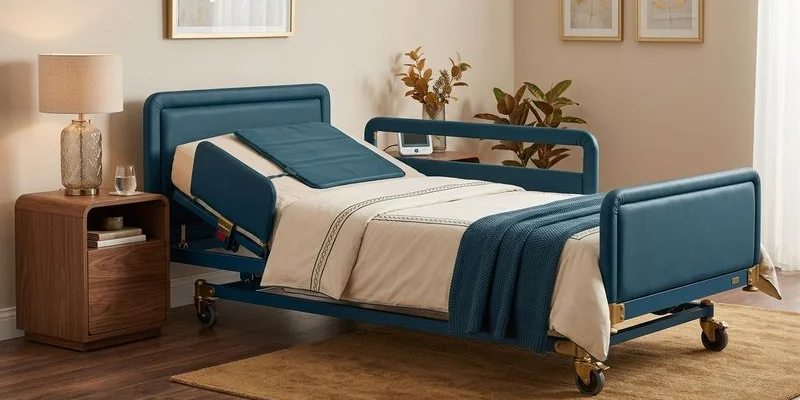
Following Alzheimer’s Association safety guidelines and FDA recommendations requires strict attention to physical gaps.
Choose a bed with the following structural safeguards:
- Gap-free rail design: Rails must sit flush against the mattress at all positions.
- Enclosed head and foot boards: Solid panels prevent the entrapment zones created by slatted designs.
- Full-coverage mattress: The mattress must fill the bed deck completely without edge gaps.
- Rail covers: Padded covers soften rails and effectively close small potential gap spaces.
Perform the standard fist test with the bed in every single position.
If you can fit a fist into any gap between the mattress and rails, the gap exceeds the FDA’s 4.75-inch safety limit.
Our installation technicians perform this test automatically to ensure total compliance.
Quiet Operation
Sudden, loud mechanical sounds can easily startle and agitate a dementia patient.
Look for beds equipped with sealed, whisper-quiet actuators.
Top-tier medical motors from manufacturers like Linak operate well under 50 decibels, which is roughly the volume of a quiet library.
Our customers find this specification especially important for nighttime adjustments when the patient may be dozing.
A noisy motor triggering a panicked awakening creates an unsafe situation for everyone.
Simple, Lockable Controls
Some dementia patients may discover the pendant control and repeatedly adjust the bed.
This repetitive action creates a severe safety hazard.
Securing these controls prevents accidental adjustments that could lead to a fall.
Choose a bed with these specific control features:
| Feature | Primary Safety Benefit |
|---|---|
| Lockout Function | Disables the patient control while allowing caregiver override. |
| Lockable Pendant Holder | Keeps the remote physically out of reach when not in use. |
| Footboard Control Panel | Moves all adjustments to a remote panel inaccessible from the mattress. |
Our delivery crews always train families on how to engage these electronic lockouts before leaving the home.
Taking control of the bed’s movement is a massive safety upgrade.
Side Rail Considerations
The side rail question remains highly complex in dementia care.
Full-length raised rails can prevent rolling falls, but they also create dangerous entrapment zones.
Patients often attempt to climb over them, significantly increasing the total fall height.
Our facility partners consistently report that full rails feel like restraints, sharply increasing patient agitation.
The Alzheimer’s Association safety guidelines clearly outline a better approach:
- Use the lowest effective rail height for the specific patient.
- Never use full-length rails as containment restraints.
- Pair low rails with ultra-low bed positioning as your primary fall strategy.
- Consider half-rails or quarter-rails that provide a steady grab point without enclosure.
- Use padded rail covers to prevent injury from hard surface impacts.
Removing the rails entirely is often the safest choice for patients who actively climb.
Relying on ultra-low positioning plus thick floor mats effectively prevents high-impact injuries.
Creating a Safe Bedroom Environment
The bed acts as the centerpiece, but the entire room needs targeted safety modifications.
Our environmental checklists help families spot hazards well beyond the mattress.
A few simple changes completely transform the space.
Lighting
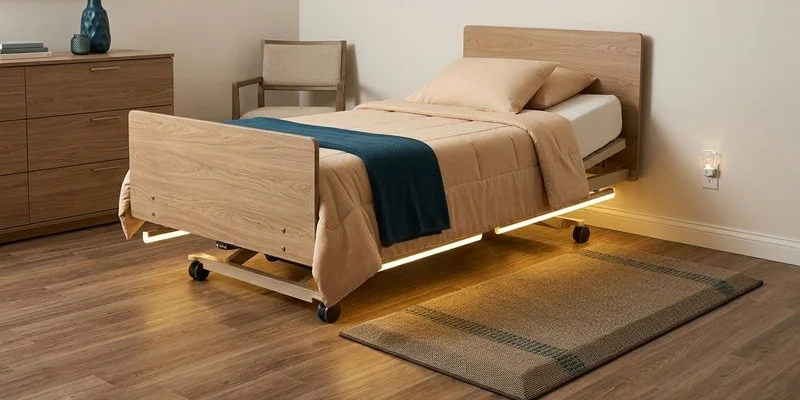
Continuous nightlights are essential because dementia patients who wake in darkness become severely disoriented.
Use warm-toned lighting around 2700 Kelvin, as cool blue light has been shown to disrupt sleep cycles.
You must also position all light sources to avoid casting harsh shadows.
Shadows are frequently misinterpreted by patients as physical threats or obstacles.
Simplification
Remove mirrors immediately if the patient no longer recognizes their own reflection, as this causes immense distress.
Minimize furniture to drastically reduce collision points during late-night wandering.
Our interior safety experts recommend removing complex floor patterns or dark rugs that might look like deep holes.
Keep the walking paths entirely clear.
Door Management
Consider placing a simple chime alarm on the bedroom door to alert you if the patient leaves the room.
Remove standard locks from the inside of the bedroom door immediately.
A confused patient who locks themselves inside a room cannot receive rapid help during an emergency.
Our safety protocol always prioritizes immediate, unrestricted access for the caregiver.
Floor Safety
Remove all decorative rugs, loose mats, and typical tripping hazards.
Place a heavy-duty, padded safety mat directly beside the bed.
Industry-standard high-impact mats must meet these criteria:
- At least 2 inches thick to absorb impacts.
- Beveled edges to prevent caregivers from tripping.
- Slip-resistant textured bottom surfaces.
Our safety experts consider an ultra-low bed paired with a premium floor mat to be the ultimate standard of care.
Ensure the main floor surface is not slippery when walked on with standard socks.
Daily Routines and Bed Use
Equipment works best when perfectly paired with predictable daily habits.
Our care coordinators stress that strict consistency is absolutely essential for dementia patients.
Routines anchor the day and reduce anxiety.
Bedtime Routine
Establish and maintain the exact same bedtime routine every single night.
A predictable schedule reduces stress and signals the brain that it is time to rest.
Follow this structured evening sequence:
- Dim the main room lights 30 minutes before bed.
- Assist with toileting to reduce late-night urgency.
- Position the patient in their preferred sleeping arrangement.
- Lower the bed completely to the ultra-low position.
- Deploy the impact-absorbing floor safety mat.
- Activate all pressure and motion bed alarms.
- Leave the warm-toned nightlights on.
- Close the bedroom door and ensure the door alarm is active.
This checklist guarantees a secure environment before the caregiver goes to sleep.
Repositioning
Dementia patients may violently resist repositioning, especially if suddenly awakened.
To minimize friction and skin shear, use the bed’s electric controls to shift position gradually.
Elevating the head or foot slightly every two hours works as a great alternative to full lateral turning.
Our nurses suggest using a high-quality, pressure-redistributing mattress to drastically reduce the need for manual rolling.
Always try to time repositioning to coincide with natural waking moments, like bathroom needs or medication times.
Morning Routine
Mornings frequently trigger intense confusion and disorientation for dementia patients.
Raise the bed slowly and speak calmly before initiating any care activities.
Give the patient a full minute to orient themselves to the room and the caregiver.
Our staff always completes this verbal orientation phase before attempting any physical transfers.
Patience during these first few minutes sets the tone for the entire day.
Selecting the Right Bed
Prioritizing features makes the buying process much less overwhelming.
Our procurement team recommends ranking specific capabilities in this exact order for cognitive care:
- Ultra-low positioning: This is absolutely non-negotiable for baseline fall safety.
- Entrapment-resistant design: Ensure hazardous gaps are eliminated at every articulation point.
- Quiet motors: Silent operation prevents agitation from mechanical noise.
- Bed alarm compatibility: Look for integrated sensors or easily attached aftermarket systems.
- Lockable controls: This explicitly prevents unauthorized patient manipulation of the frame.
- Residential styling: A home-like appearance reduces the institutional feel that triggers confusion.
The market offers several models that meet these exact specifications.
Our ultra-low hospital beds and beds for seniors are highly popular choices for dementia care environments.
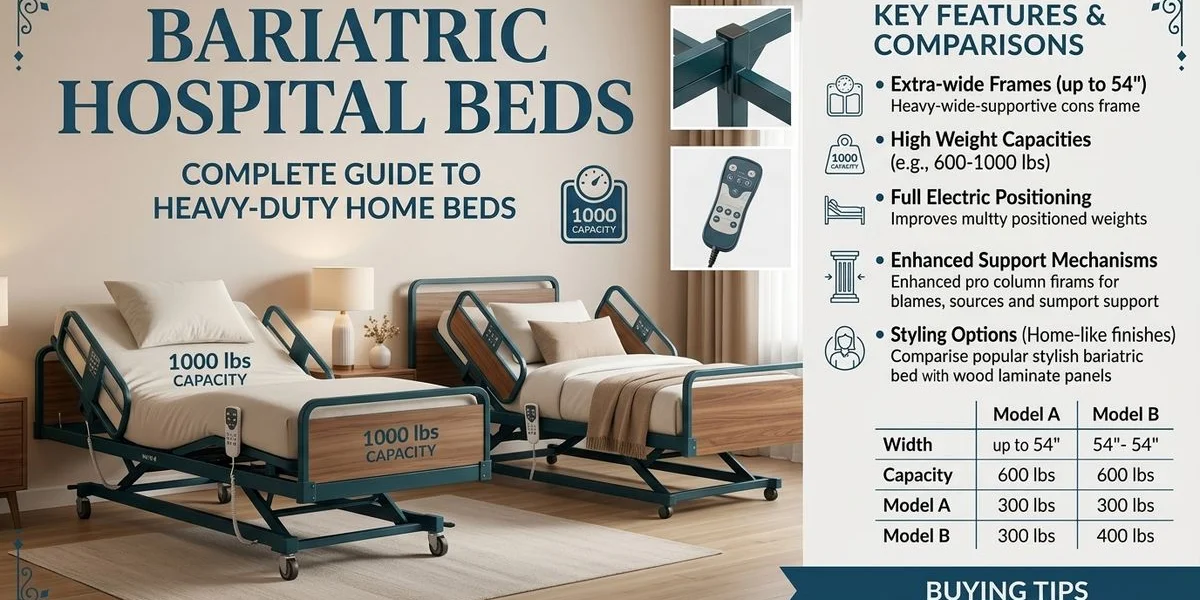
Patients who need extra width for comfort or turning can utilize the bariatric options, which are fully equipped with ultra-low positioning capabilities. For patients with other cognitive or physical conditions, our special needs beds offer additional safety configurations.
Caregiver Support
Caring for a dementia patient at home is universally recognized as one of the most demanding forms of caregiving.
The Alzheimer’s Association offers crucial support groups, educational resources, and a 24/7 helpline at 800-272-3900.
These resources provide a vital lifeline for families who need medical guidance or emotional support.
Our local representatives encourage Orlando-area caregivers to connect with the Central and North Florida Chapter for in-person respite care referrals.
Finding the right setup does not have to be a frustrating solo mission.
For expert help Choosing a Hospital Bed for Alzheimer, visit our Orlando showroom or contact our specialized team today.
Families can trust that the right bed, accessories, and safety equipment will profoundly improve daily life.
For a deeper look at heavy-duty and specialized bed types, read our bariatric hospital bed guide. You can also explore the complete buying guide for a comprehensive overview of all available options and technical specifications.