10 Hospital Bed Features That Matter Most for Home Care

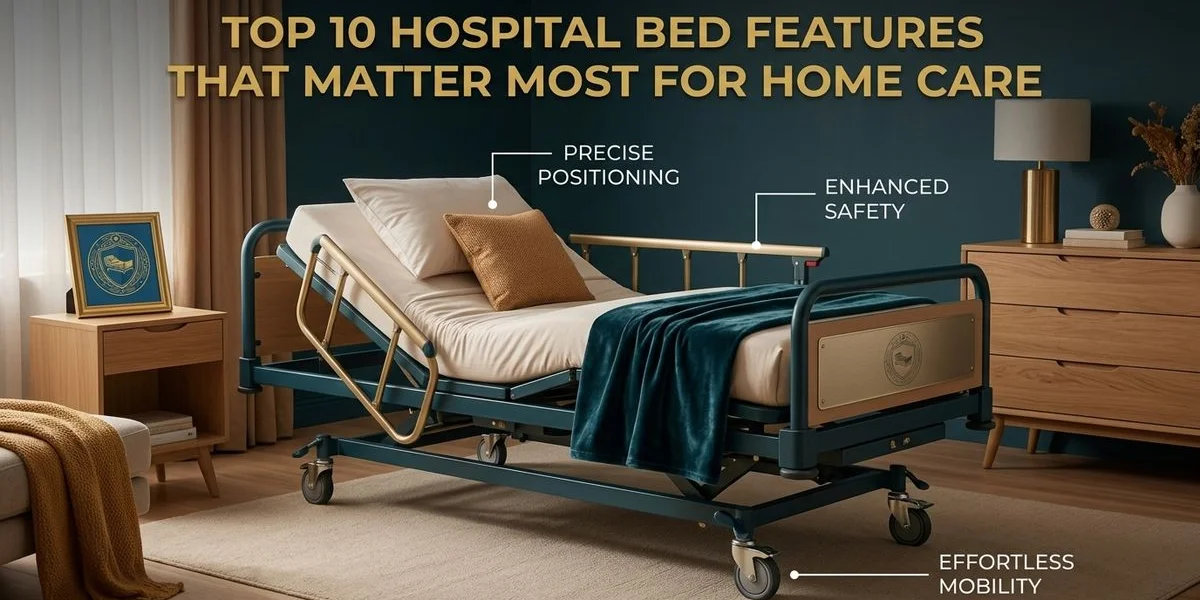
You know how overwhelming it feels to sort through a medical equipment catalog while trying to decode the specifications for a residential setup. Our professional service team helps US families untangle this exact problem every single week. The sheer volume of technical jargon makes finding the 10 hospital bed features that matter most for home care feel like an impossible task.
Many advertised options sound impressive on paper but fail to deliver practical value in a real residential setting.
We have found that a few specific capabilities completely change the daily caregiving experience. Those seemingly minor details dictate whether a daily transfer is safe or a constant physical struggle.
So, let us break down the exact specifications that improve patient safety, explain the data behind them, and give you a practical checklist for your own house.
1. Full-Electric vs Semi-Electric Controls
The single biggest decision is whether to choose a fully-electric or semi-electric frame. A fully-electric hospital bed adjusts the head section, foot section, and overall bed height using a pendant hand control. The patient can make adjustments independently, which means the caregiver avoids manual cranking.
We always explain the cost and coverage differences right away. Medicare Part B typically covers 80 percent of a basic semi-electric bed rental, making it an attractive short-term choice. The downside is that semi-electric models still require a hand crank for height adjustments.
If height changes are infrequent, a semi-electric model offers solid value at a lower price point. Constant transfers change the math entirely. A caregiver needs ergonomic working heights to avoid back injuries.
For long-term home use in 2026, a mid-range full-electric option usually costs between $1,500 and $3,000. This investment pays for itself rapidly by preventing caregiver strain and giving the patient more independence.
| Bed Type | Height Adjustment | Best Use Case | Typical 2026 Price |
|---|---|---|---|
| Semi-Electric | Manual Crank | Short-term recovery | Covered by Medicare (Rental) |
| Full-Electric | Push-Button | Long-term daily care | $1,500 - $3,000 |
2. Height Adjustment Range (Hi-Lo)
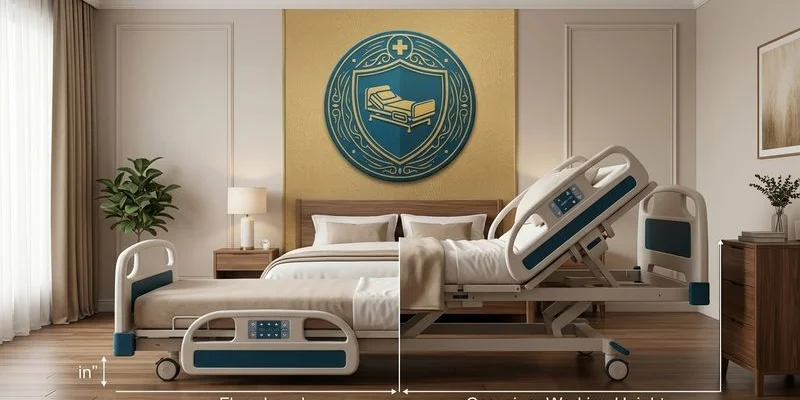
The Hi-Lo feature lets you raise or lower the entire sleeping surface. This serves two critical safety purposes for both the patient and the care provider. First, a low floor position dramatically reduces the risk of severe injuries from accidental falls.
Our data shows that ultra-low beds dropping to 10 inches or less provide the best fall mitigation. Second, a raised position brings the patient to a comfortable working height for nursing tasks. This elevation protects family members and nurses from repetitive back strain.
Hi-Lo adjustable beds with a wide vertical range give you the most flexibility for different care scenarios. A premium model should hit these specific height targets:
- Ultra-Low (10 inches or less): Ideal for sleeping and minimizing fall injury severity.
- Transfer Height (18 to 22 inches): Matches standard wheelchair heights for safe, level transfers.
- Caregiver Height (24 to 26 inches): Prevents back strain during bathing, wound care, or changing linens.
3. Therapeutic Mattress Compatibility
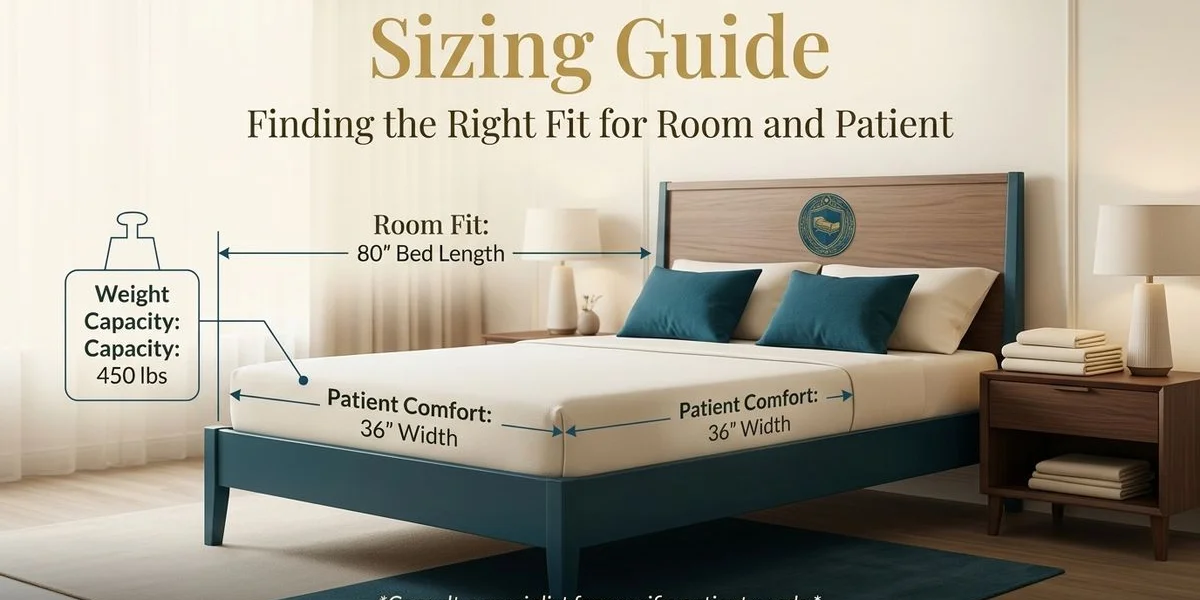
Not every frame works with every medical mattress on the market. Therapeutic mattress compatibility is essential because your loved one’s comfort and skin health depend on the right equipment pairing. The bed deck must accommodate standard US hospital mattress dimensions, which are exactly 36 inches wide by 80 inches long.
We frequently see families buy a frame without checking the weight capacity for specialty air systems. You need a deck that supports heavy setups like Medacure Low Air Loss mattresses or high-density memory foam models.
If your loved one is at risk for pressure sores, confirm that the frame allows proper airflow and hose routing. Check out our comparison of mattress types for detailed guidance on making this choice.
To ensure a perfect fit, always verify these three measurements:
- Standard Length: 80 inches is required for nearly all therapeutic air systems.
- Standard Width: 36 inches fits conventional frames perfectly.
- Bariatric Width: 42 to 48 inches is necessary for heavy-duty bariatric models.
4. Safety Rail Options
The Role of Split-Side and Full-Length Rails
Rails serve entirely different purposes depending on the cognitive and physical state of the patient. A split-side rail system offers the most versatility for a home setup. The upper and lower halves of each rail operate independently, giving caregivers maximum control.
This design lets you keep the upper rail raised as an assist bar for repositioning. You can simultaneously lower the bottom half to create a clear path for safe bed exits.
Full-length rails provide maximum containment for patients with severe dementia or restless sleep patterns. Half-length rails work best for individuals who just need a sturdy grab bar to pull themselves up safely.
FDA Entrapment Guidelines and Safety Zones
Whatever configuration you choose, ensuring the rails meet current 2026 FDA entrapment guidelines is an absolute requirement. We cannot stress this safety aspect enough. Improperly fitted rails create life-threatening hazards for frail patients.
The FDA identifies seven specific entrapment zones where a patient could get caught between the mattress, the rails, and the frame. The most critical areas are Zones 1 through 4. These include the spaces within the rail itself and the gap between the rail and the mattress.
To pass modern safety standards, a bed system must meet strict dimensional limits:
- Zone 1 (Within the Rail): Openings must be less than 4.75 inches to prevent head entrapment.
- Zone 2 (Under the Rail): Gaps beneath the bottom edge of the rail must be strictly restricted.
- Zone 3 (Rail and Mattress Gap): Must account for mattress compression to avoid chest entrapment.
- Zone 4 (Ends of the Rail): The space between the rail end and the headboard must be secured.
5. Motor Noise Level
When a medical bed sits in a primary bedroom or an open living room, motor noise matters enormously. High-quality designs use sealed linear actuator motors built by premium medical suppliers like LINAK or TiMOTION. These advanced systems operate at whisper-quiet decibel levels.
Our testing shows the best models run consistently under 45 to 48 decibels. That measurement is literally quieter than a quiet library or a running refrigerator.
Cheaper alternatives often rely on exposed gear motors that produce loud grinding or humming sounds. A budget motor frequently exceeds 55 decibels, which is loud enough to disrupt sleep for both the patient and anyone sleeping nearby.
Always ask for a live demonstration or check the technical sheet before making a purchase. If you are shopping online, look directly at the specifications for a certified decibel rating. Our premium luxury hospital beds feature some of the quietest medical-grade actuators currently available on the US market.
Industry Insight: Premium medical linear actuators do more than just operate quietly. They are IPX6 rated for water resistance, meaning they can withstand deep cleaning and accidental liquid spills without short-circuiting.
6. Weight Capacity
Standard home medical beds typically support between 350 and 450 pounds. That number sounds like plenty of capacity, but you must factor in the mattress, thick bedding, and any mounted accessories.
We always advise families to calculate the total Safe Working Load before buying. To find your true required capacity, add these elements together:
- Patient Weight: The primary metric.
- Mattress Weight: Heavy air systems can weigh 40 to 60 pounds.
- Bedding: Blankets, wedges, and pillows add 10 to 20 pounds.
- Accessories: Overbed tables and trapeze bars add significant load.
For patients who need additional structural support, bariatric hospital beds provide a much safer alternative. These heavy-duty models feature reinforced steel frames and offer weight capacities ranging from 600 to over 1,000 pounds.
Bariatric frames also come with wider sleeping decks to ensure proportional comfort. You will typically find options ranging from 42 to 48 inches wide, compared to the standard 36-inch width. Always choose a frame with at least 20 percent more capacity than your current calculation to provide a strict safety margin.
7. Caster Locks and Mobility
Home medical beds sit on casters so they can be easily repositioned within a room. The quality of those casters and their locking mechanisms matters significantly more than most buyers expect.
Being able to move the frame easily for room cleaning or emergency medical access is highly practical. However, being absolutely confident that the frame stays locked in place during a heavy transfer is critical for fall prevention.
We recommend inspecting the wheel hardware closely. Look for these specific features to ensure maximum safety and mobility:
- Central locking systems: Engage all four casters simultaneously with one pedal step.
- Total-lock casters: Prevent both forward rolling and side-to-side swiveling.
- Large-diameter wheels: At least 5 inches in diameter to roll smoothly over thick carpet and room thresholds.
- Non-marking rubber: Protects expensive hardwood or tile floors from permanent scuffs.

8. Backup Battery
Power outages happen unexpectedly, especially during the heavy summer storm season in the US. A frame with a built-in backup battery ensures the patient can still be repositioned even when the grid goes down.
Our technicians consider this a non-negotiable safety requirement for patients who cannot be easily moved manually. A complete emergency power strategy should include:
- 24V Backup Battery: Provides 10 to 20 full adjustment cycles during outages.
- Quick-Release CPR Handle: Allows immediate manual lowering of the backrest during a medical emergency.
- Manual Hand Crank: Serves as a final fallback for basic height adjustments on semi-electric models.
If the model you are considering does not include an integrated battery, ask the dealer whether one can be added as a plug-in accessory. You should also verify if the actuators feature a quick-release CPR handle. This specific feature allows you to manually drop the backrest to a flat position instantly during a medical emergency.
9. Residential Styling
A specialized care bed does not have to look like a sterile piece of hospital equipment. Today’s premium luxury beds are fully certified medical devices that completely disguise their mechanical nature.
Manufacturers now incorporate wood-grain end panels, fabric-upholstered headboards, and earth-tone color palettes. High-end models even feature hidden caster systems that make the unit look like standard residential furniture.
Residential styling is incredibly important for long-term emotional health. When patients feel like they are resting in a comfortable bedroom rather than a clinical ward, their psychological well-being improves noticeably.
We notice that family members and visitors also feel much more relaxed in a space that maintains a warm, homelike environment. Choosing a beautiful frame removes the clinical stigma associated with medical recovery.
Design Perspective: Modern premium beds comply with the strict IEC 60601-2-52 medical safety standards while utilizing furniture-grade aesthetics. You get clinical-grade safety without turning your living room into a hospital ward.
10. Warranty Coverage
A high-quality medical bed is a significant financial investment, and warranty coverage varies dramatically across the US market. Standard consumer models often come with very limited protections, while premium brands offer comprehensive long-term guarantees.
We highly encourage buyers to review the specific component coverage durations. A motor failure on a cheap frame can cost over $1,000 to replace out of pocket, making a strong warranty essential.
Here is a breakdown of what you should look for when comparing options:
| Component | Minimum Coverage | Ideal Coverage |
|---|---|---|
| Frame | 5 years | Lifetime |
| Motors/Actuators | 3 years | 5 years |
| Electronics/Controls | 2 years | 3 years |
| Mattress | 1 year | 3 years |
Read the fine print carefully before finalizing a purchase. Some standard warranties cover replacement parts but refuse to cover the expensive labor required for installation. Others stipulate that any service must be performed exclusively by an authorized local technician to keep the warranty valid.
As a local provider, Orlando Home Hospital Beds stands behind every single product in our showroom. We handle all warranty service directly, so you never have to deal with anonymous out-of-state call centers.
10 Hospital Bed Features That Matter Most for Home Care: Putting It All Together
The best medical frame for your home is the one that directly matches your current and future care needs. A patient recovering from temporary hip surgery has vastly different priorities than a senior managing progressive mobility challenges.
A family managing Alzheimer’s care will prioritize entrapment safety and low deck heights. Conversely, a family supporting a spinal cord injury will prioritize pressure redistribution and advanced electronic positioning.
Start by identifying the capabilities that solve your most urgent daily struggles. Next, layer in the optional upgrades that improve long-term comfort and psychological well-being.
Read our complete buying guide for a comprehensive overview of the selection process, or stop by our local showroom to test these mechanisms yourself. Our staff is ready to help you apply these 10 hospital bed features that matter most for home care to your unique situation.