The Complete Guide to Buying a Hospital Bed for Your Home in 2026


Welcome to The Complete Guide to Buying a Hospital Bed for Your Home in 2026.
Our team sees the immediate physical and logistical challenges that arise when transitioning a loved one to home care. The dividing line between a stressful environment and a safe recovery space is often the equipment you choose. A Durable Medical Equipment investment like a home hospital bed completely transforms the quality of care you can provide.
We will review the latest bed types, exact US market costs, and why families are skipping the insurance wait. Let’s look at the data and explore practical ways to respond.
The Complete Guide to Buying a Hospital Bed for Your Home in 2026: Why Families Choose Home Care
The trend toward home-based recovery and long-term care has accelerated dramatically. According to a 2025 AARP survey, 75% of adults aged 50 and older want to remain in their current homes as they age. Hospitals discharge patients sooner, and rehabilitation centers enforce strictly limited stays. A home hospital bed bridges the gap between clinical-grade support and the warmth of a residential bedroom.
Our team frequently speaks with Orlando families who purchase a hospital bed outright to get immediate access to necessary equipment. The private-pay model eliminates weeks of prior authorization paperwork. Families bypass the standard four to eight week Medicare approval delays to secure immediate comfort. You choose exactly the features your specific situation demands.

Financial data also drives this decision for many households. The 2025 CareScout Cost of Care Survey shows a semi-private room in a nursing home now averages $9,277 per month in the United States. Home care is often far more affordable, especially when families equip their homes properly. Caregivers experience significantly less physical strain when they have the right mechanical assistance.
We know that the entire family benefits from having safe, medically appropriate support around the clock.
Types of Home Hospital Beds Explained
Understanding the different categories of home hospital beds is the first step toward finding your perfect match. Each type is classified as an FDA Class II medical device. This classification means the bed meets rigorous safety and performance standards for patient care.
Fully-Electric Hospital Beds
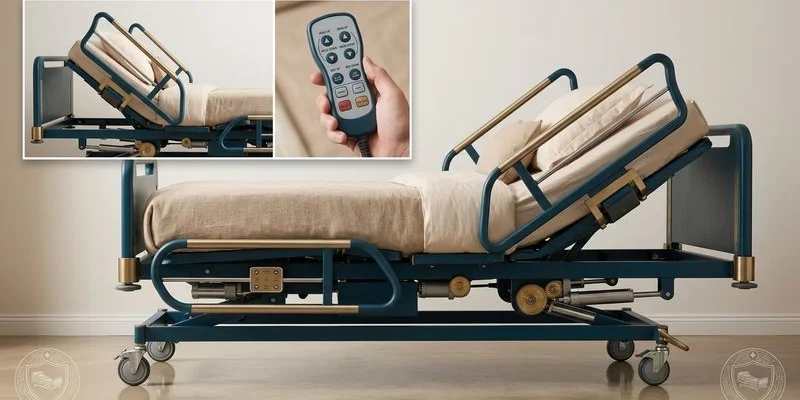
Fully-electric hospital beds offer the most convenience for both patients and caregivers. Every adjustment is controlled with a simple pendant hand control, including head elevation, foot elevation, and overall bed height. These beds are ideal for patients who need frequent repositioning.
Our specialists note that Medicare usually classifies the electric height adjustment as a convenience feature under HCPCS code E0265, frequently denying coverage. Private purchase ensures you get this crucial back-saving function. Caregivers want to minimize physical effort, and push-button height control makes safe transfers possible.
Semi-Electric Hospital Beds
Semi-electric models use electric motors for head and foot adjustments but require a manual hand crank for height changes. They cost less than fully-electric options and work well when height adjustment is infrequent. This style falls under Medicare code E0260.
We recommend these for families on a strict budget who do not need frequent height adjustments. The manual crank does require physical exertion from the caregiver.
Hi-Lo Adjustable Beds
Hi-Lo adjustable beds emphasize the height-adjustment feature, allowing the bed surface to move from a standard height down to a very low position. Patients who transfer in and out of a wheelchair frequently rely on this exact height matching.
Our team finds this feature crucial for safe daily mobility. It provides independence for patients retaining some upper body strength.
Bariatric Hospital Beds
Designed for patients who need extra width and higher weight capacity, bariatric hospital beds feature reinforced steel frames and wider mattress decks. Trusted brands like Drive Medical and Invacare manufacture specialized models that safely support 600 to 1,000 pounds.
We stock these heavy-duty beds to provide essential stability for larger patients. The wider 42-inch to 54-inch sleep surface prevents feelings of confinement.
Ultra-Low Hospital Beds
Ultra-low hospital beds can lower to just a few inches above the floor, dramatically reducing injury risk from falls. The CDC reports that falls cause millions of injuries among older adults each year.
We highly suggest these beds for patients with Alzheimer’s disease or severe dementia. Placing a fall mat next to an ultra-low bed virtually eliminates the risk of serious impact injuries.
Premium and Luxury Hospital Beds
For families who want clinical functionality without a clinical look, premium luxury hospital beds feature residential styling with wood-grain finishes and hidden casters. Premium models utilize advanced LINAK or TiMOTION motors that operate at whisper-quiet levels below 45 decibels.
Our premium selections blend seamlessly into a beautiful bedroom environment. They provide dignity and comfort without looking like institutional hospital equipment.
Key Features to Look For
Not all hospital beds are created equal, and specific components dictate how well the bed performs daily. Here are the features that make the biggest difference in long-term daily use.
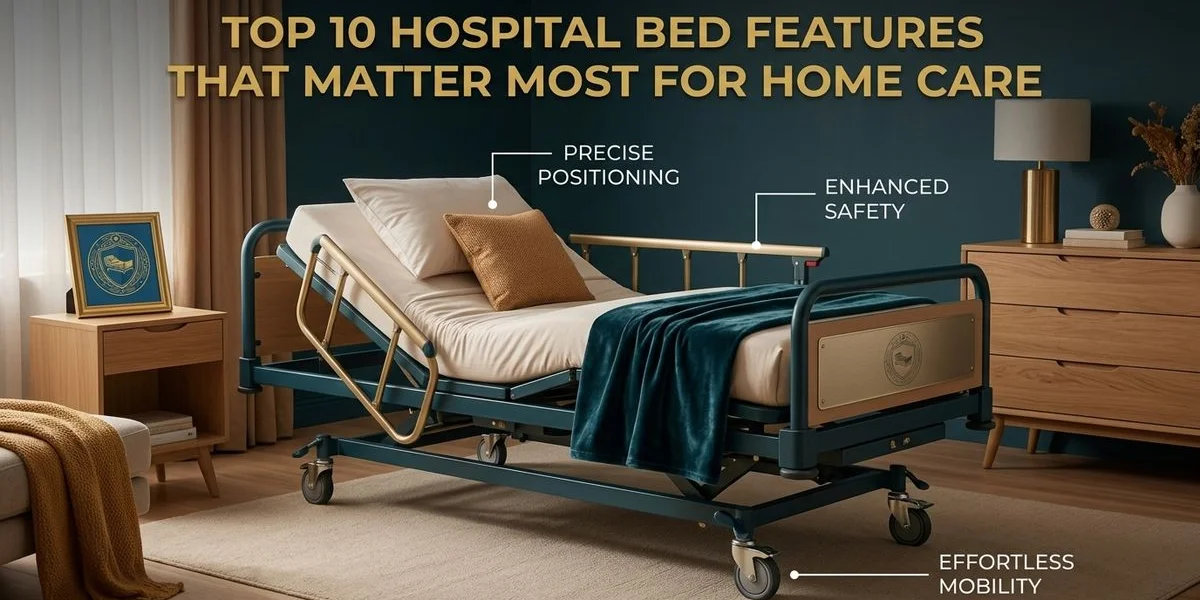
- Positioning Capabilities: Look for beds that support the semi-Fowler position with the head elevated 30 to 45 degrees. This angle is essential for patients with respiratory issues or acid reflux. Advanced models also offer Trendelenburg positioning, where the foot of the bed is elevated above the head to help with circulation.
- Height Adjustment Range: The ability to raise and lower the entire bed surface helps caregivers provide care at an ergonomic working height. A range from about 10 inches to 26 inches covers most transfer needs.
- Safety Rails: Full-length rails, half-length rails, and quarter rails each serve different purposes. You must verify that the rails comply with FDA entrapment guidelines and the ASTM F3186-17 safety standard. Proper installation prevents dangerous gaps between the mattress and the rail.
- Motor Quality: Quiet, reliable motors matter enormously when the bed is in a living space. Look for beds with sealed medical-grade linear actuators rated for thousands of cycles to avoid disruptive noise during the night.
- Mattress Compatibility: Ensure the bed frame accommodates the type of therapeutic mattress your loved one needs. Options range from standard foam to advanced alternating-pressure systems that prevent severe bedsores.
Understanding Pricing and What Is Included
Hospital bed pricing varies widely based on the type, features, and included accessories. We track these costs closely to provide accurate expectations based on 2026 US market averages. Here is a general framework to guide your budget.
| Category | Typical Price Range | What Is Included |
|---|---|---|
| Semi-Electric | $800 - $1,500 | Bed frame, basic mattress, side rails |
| Fully-Electric | $1,200 - $3,000 | Bed frame, therapeutic mattress, rails, pendant control |
| Bariatric | $2,500 - $5,000+ | Heavy-duty frame, bariatric mattress, reinforced rails |
| Premium/Luxury | $3,000 - $8,000+ | Residential styling, premium mattress, full accessories |
When comparing prices, always clarify what the package actually includes. Hospital bed packages that bundle the frame, mattress, rails, and an overbed table together often provide significant savings compared to buying each component separately.
White-Glove Delivery: What to Expect
One of the most important aspects of purchasing a hospital bed is the delivery and setup process. White-glove delivery means a trained team brings the bed into your home, assembles it completely, and positions it in the room you have prepared.
Our delivery technicians walk you through every feature before they leave. Here is what to expect on delivery day:
- Pre-delivery room preparation: Clear the room of furniture that will not be needed. We recommend leaving at least three feet of clearance around the bed for safe caregiver access.
- In-home assembly: The delivery team assembles the heavy steel bed frame, which often weighs between 150 and 300 pounds. They install the mattress, attach safety rails, and connect the electrical system.
- Pendant control training: You and any caregivers receive hands-on training with the pendant hand control. The team ensures you understand each specific position adjustment.
- Bed positioning: The team helps you determine the optimal room placement. They consider electrical outlets, bathroom access, and caregiver workflow.
- Safety review: A thorough review of rail operation, lock mechanisms, and emergency procedures concludes the visit.
At Orlando Home Hospital Beds, we include white-glove delivery with every purchase. Our team does not leave until you and your caregivers feel completely confident operating the equipment.
Questions to Ask Before You Buy
Before committing to any hospital bed purchase, ask these critical questions to ensure a safe fit.
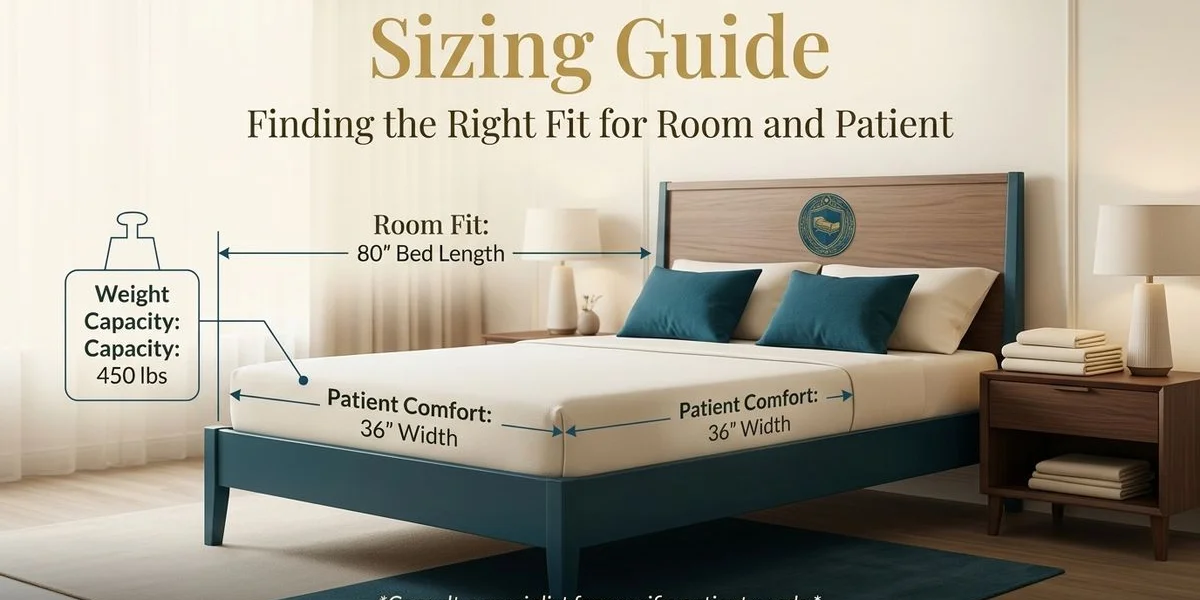
- What is the total weight capacity, including the patient, mattress, and bedding?
- What type of mattress is included, and is it appropriate for my loved one’s specific skin condition?
- What is the warranty coverage for the frame, motor, and electrical components?
- Does the delivery include complete assembly and hands-on training?
- What is the bed’s exact height range at its lowest and highest settings?
- Are replacement parts readily available locally if a motor fails?
Why Private-Pay Is Simpler Than Insurance
Many families initially assume insurance will cover their hospital bed without issue. While Medicare Part B and some private insurance plans do cover Durable Medical Equipment, the process involves significant bureaucratic hurdles. You will face strict physician prescription requirements, prior authorization requests, and limited brand choices.
Delivery timelines through insurance can stretch for four to eight weeks. Private-pay purchasing eliminates all of these delays immediately. You choose exactly the bed you want with the exact features you need, and you receive it on your own schedule.
Our customers find that for families dealing with an urgent care situation, this speed and simplicity are invaluable.

That said, we understand every family’s financial situation is different. Our team can help you understand all your options, including financing plans that make private-pay completely accessible.
Making Your Decision
Buying a hospital bed for your home is a significant decision, but it does not have to be a stressful one. Start by assessing your loved one’s specific needs, including their medical condition, mobility level, weight, and how long they will need the bed. Then match those needs to the specific features and bed types outlined above.
Visit our Orlando showroom to see and test beds in person. Our specialists will help you evaluate every option and find the perfect match for your family’s needs, room layout, and exact budget.
We carry fully-electric beds, hi-lo adjustable beds, bariatric models, ultra-low beds, and premium luxury options. All models are available for immediate delivery with white-glove setup throughout the greater Orlando area. We hope The Complete Guide to Buying a Hospital Bed for Your Home in 2026 has provided the clarity you need to secure the best possible care environment today.