The Caregiver's Guide to Using a Hospital Bed at Home


Providing home care for a family member is a massive commitment that fundamentally changes your daily routine.
We know that over 63 million Americans are currently working as unpaid family caregivers right here in the US. That staggering 2025 statistic reveals just how common this challenging role has become.
Our team sees families constantly struggling with the physical demands of caregiving. You need specific strategies to protect both your health and the well-being of your loved one.
We are going to break down the main reasons back injuries happen and walk through the exact techniques professionals use. Let’s look at the best practices, what the safety data tells us, and explore practical ways to respond.
Understanding Your Hospital Bed’s Controls
Before you start providing care, spend time learning every function of the equipment. We highly recommend testing the pendant control extensively before the patient ever gets into the bed. Standard US hospital beds typically have a maximum weight capacity of 350 to 450 pounds, while bariatric models support up to 1,000 pounds.
Our experience shows that fumbling with controls while supporting a patient is frustrating and potentially unsafe. Whether you use a fully-electric hospital bed or a semi-electric model, you need to memorize the basic adjustments.
- Head elevation: Raises the upper body for eating, breathing, and conversation.
- Foot elevation: Lifts the lower legs to reduce swelling and improve circulation.
- Hi-Lo adjustment: Raises or lowers the entire bed surface.
- Trendelenburg: Tilts the whole bed so the feet are higher than the head (available on select models).
Safe Patient Transfers
OSHA data from 2025 shows that 50 percent of reported injuries among nursing assistants are musculoskeletal disorders. We see similar injury risks for family members performing manual transfers at home. The National Institute for Occupational Safety and Health (NIOSH) sets a strict 35-pound maximum lifting limit under ideal conditions.
Our team insists that you prioritize safe techniques to avoid becoming part of these statistics. Transferring a patient into and out of the bed is the moment when accidents happen most frequently.
Bed-to-Wheelchair Transfer
Proper alignment prevents unnecessary lifting strain. We always begin by setting the bed height so the sleeping surface matches the wheelchair seat height exactly. This simple step is the most important daily function of hi-lo adjustable beds.
- Lower the side rail on the exit side only.
- Lock the wheelchair next to the bed at a 45-degree angle with its brakes fully engaged.
- Help the patient sit at the edge of the bed with feet flat on the floor.
- Use a transfer belt around the patient’s waist.
- On a count of three, assist the patient to stand, pivot, and sit in the wheelchair.
Buying a dedicated gait belt is a mandatory safety step. We know that a quality transfer belt costs about $15 to $20 in the US, but it can prevent thousands of dollars in medical bills from a catastrophic fall. Grip the belt firmly during the pivot rather than grabbing the patient’s arms or clothing.
Bed-to-Standing Transfer
For patients who can bear weight but need stability assistance, you must use proper leverage. We instruct caregivers to raise the head of the bed to a seated position first. Following a strict order of operations keeps everyone safe.
- Lower the bed height until the patient’s feet rest flat on the floor.
- Have the patient use the side rail as a grab bar to push up.
- Stand in front of or slightly to the side of the patient with a wide, stable stance.
- Support at the transfer belt or under the arms, but never pull the patient.
Using a Hoyer Lift
When a patient cannot bear weight, a Hoyer lift becomes a strict necessity. We always verify that the lift’s base legs fit under the bed frame before attempting a transfer. Standard Hoyer lifts safely support around 400 pounds, but compatibility with your specific bed model is essential.
Our experts recommend using two caregivers for Hoyer lift transfers until you are highly experienced. Always test the sling attachment points before lifting.
- The lift’s base legs must fit under the bed frame.
- Check the bed’s under-frame clearance to ensure smooth operation.
- The bed must be at the correct height for the sling to clear the mattress.
- Confirm all sling straps are secure before adding weight.

Bed Positioning Techniques
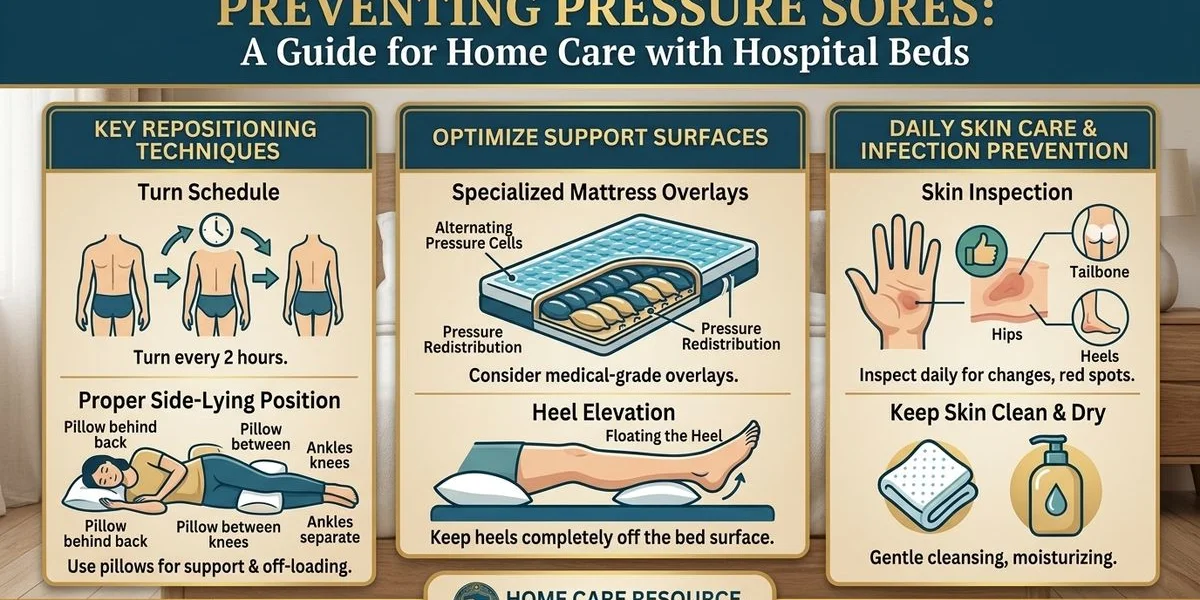
Knowing how to position a patient correctly prevents pressure sores and improves breathing. We train families to use the clinical “Rule of 30” for bedridden patients. This medical standard means elevating the head of the bed no more than 30 degrees and tilting the body at a 30-degree angle to reduce shear forces.
Our protocol also requires following a strict two-hour turning schedule to protect skin integrity. Master these essential techniques to improve daily comfort.
Semi-Fowler Position
The head of the bed is elevated 30 to 45 degrees with the knees slightly raised. We recommend this as the most common position for daily activities. It provides excellent support for the lower back and promotes better digestion.
- Eating and drinking safely.
- Watching television or reading comfortably.
- Managing respiratory conditions.
- Recovering from various surgical procedures.
High Fowler Position
The High Fowler setup involves elevating the head 60 to 90 degrees. We use this upright seated posture to prevent specific health complications like aspiration. Sitting fully upright is ideal for active visiting hours.
- Eating meals to reduce choking risks.
- Administering breathing treatments.
- Facilitating comfortable conversations.
Lateral (Side-Lying) Position
Turning a patient to their side is vital for pressure relief and wound care. Our staff uses a specific rolling method to minimize skin friction. Take your time with these steps to ensure proper spinal alignment.
- Lower the head of the bed completely flat.
- Raise the side rail on your active side.
- Cross the patient’s far arm over their chest and far leg over the near leg.
- Roll the patient gently using their hip and shoulder.
- Place pillows behind the back, between the knees, and under the top arm.
- Raise the opposite side rail to secure the position.
Prone Position
Medical professionals rarely use the prone position in standard home care. We only position a patient face-down with specific medical direction from a physician. Certain respiratory conditions require this stance, but it demands careful monitoring.
Preventing Caregiver Back Strain
Caregiver back strain remains a critical issue that sidelines thousands of family members every year. We know that the average workers’ compensation claim for a clinical patient handling injury exceeds $14,000 in the US. You can avoid similar physical and financial tolls by adopting strict ergonomic habits.
Our therapists warn that a single improper lift can cause a back injury that creates an immediate crisis in your home. Protection starts with setting up your environment correctly.
Use the Bed Height Every Time
The most effective prevention strategy is utilizing the electric Hi-Lo feature. We teach caregivers to raise the bed to waist height before starting any hands-on care activity. This single action eliminates the stooping that causes the vast majority of lower back injuries.
Our team emphasizes lowering the bed back down once the task is complete. Consistent use of the height controls is your best defense against pain.
Body Mechanics
Proper lifting mechanics require conscious effort until they become habit. We emphasize keeping your back straight and bending at the knees. A wide, stable stance provides the necessary foundation for safe movement.
- Position yourself close to the patient to maintain leverage.
- Turn your entire body rather than twisting at the waist.
- Use your leg muscles for lifting power instead of your back.
- Tighten your core muscles before any physical effort.
Assistive Devices
Investing in the right tools will drastically reduce your daily physical strain. We highly recommend acquiring a few key items to supplement the bed’s built-in features. The small upfront cost of these accessories pays off by preventing severe injuries.
| Device Name | Primary Function | Cost/Value Benefit |
|---|---|---|
| Transfer Belt | Provides secure grip points | Prevents expensive fall injuries |
| Slide Sheet | Reduces friction in bed | Protects caregiver shoulders |
| Turning Pad | Aids in rolling the patient | Minimizes sheer on patient skin |
| Hoyer Lift | Lifts patients over 150 lbs | Essential for zero-weight-bearing |
| Trapeze Bar | Lets patient assist in moving | Promotes patient independence |
Daily Care Routines
Establishing a predictable daily schedule benefits both the patient and the care provider. We advise using standardized assessment tools like the Braden Scale during your routines to catch early signs of skin breakdown. A structured approach ensures no critical care tasks slip through the cracks.
Our planned routines help you manage your energy levels throughout the day. Adapt these schedules to fit your specific medical requirements.
Morning Routine
The morning sequence prioritizes hygiene and safety right after waking. We consider raising the bed to your working height as the first mandatory step. Completing these tasks systematically saves time and effort.
- Raise the bed to your waist level.
- Perform a skin check for redness or early pressure sore signs.
- Assist with a bed bath or bathroom transfer.
- Change the bedding while the surface is elevated.
- Position the patient in semi-Fowler for breakfast.
- Administer morning medications.
- Lower the bed for optimal patient comfort.
Midday Routine
The middle of the day requires active repositioning to maintain circulation. We usually schedule range-of-motion exercises before lunch to stimulate appetite and blood flow. Keeping the patient engaged prevents daytime lethargy.
- Reposition the patient from their back to their side.
- Encourage gentle movement exercises.
- Assist with lunch in the Fowler position.
- Check the skin at all major pressure points.
Evening Routine
Evening care focuses on securing the patient for a safe and restful night. We find that many patients breathe easier and sleep better with slight head elevation. Securing the environment prevents nighttime accidents.
- Assist with dinner positioning.
- Complete the evening hygiene routine.
- Administer all scheduled night medications.
- Adjust the mattress for sleep preferences.
- Lower the bed height fully for fall prevention overnight.
- Ensure the call bell or monitor is within reach.
Safety Rail Management
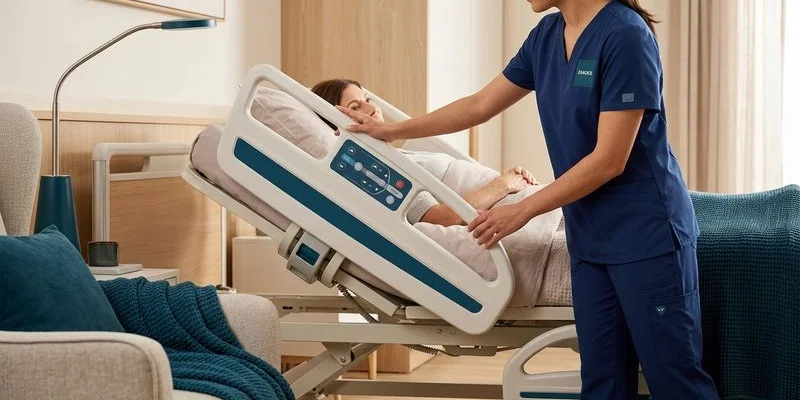
Side rails are a necessary safety tool that must be managed with strict attention to detail. We rigorously follow the US Food and Drug Administration (FDA) guidelines regarding hospital bed entrapment risks. The FDA identifies seven specific zones where a patient can become trapped.
Our safety audits ensure the gap between the rail and the mattress in Zones 1 through 3 is always less than 4.75 inches. Managing these gaps prevents severe head and neck injuries.
- Never use full-length rails as restraints, as this is both unsafe and potentially illegal.
- Check the gaps between the rail and mattress weekly to ensure compliance.
- Lower rails during transfers to prevent dangerous trips and falls.
- Raise the opposite rail when working on one side of the bed.
- Consider half-rails for patients who just need a secure grab bar.
When to Call for Help
Every dedicated family member eventually reaches their physical and emotional limits. We urge you to recognize the signs of caregiver burnout before your health fails. Professional support options exist to share the heavy load.
Recognizing the Breaking Point
Your body will signal when the caregiving demands have become unsustainable. We suggest monitoring your sleep patterns and physical pain levels closely. Ignoring these warning signs leads to a rapid decline in the quality of care.
- Your back or joints hurt consistently after providing care.
- Patient transfers begin to feel unsteady or unsafe.
- You sleep less than six hours a night due to caregiving demands.
- You feel anxious or resentful daily.
- The patient’s medical needs exceed your training level.
Exploring Professional Respite Options
Bringing in professional help is a necessary investment in your own longevity. We often recommend hiring a home health aide to cover a few shifts each week. The US national median cost for in-home respite care is roughly $33 per hour in 2026.
Our clients also explore adult day care programs, which average about $115 per day, to get a much-needed break. Financial planning for these services secures your long-term caregiving ability.
Equipment That Supports Better Caregiving
The right supplementary equipment makes home caregiving a sustainable long-term arrangement. We offer various solutions that integrate perfectly with your primary medical bed.
Investing in targeted accessories directly improves patient outcomes.
- Hospital bed packages that include an overbed table and accessories.
- Specialized beds for seniors that prioritize safe transfers and fall prevention.
- A therapeutic mattress appropriate for your loved one’s skin health needs.
- A bedside commode for accessible nighttime use.
- A shower chair or transfer bench for bathing safety.
- A bed alarm for patients at a high fall risk.
Taking advantage of these resources ensures you make the best possible equipment choices. We are always available in Orlando to help you find the correct combination of items for your specific situation.
For practical room layout advice, read our guide on setting up a home recovery room. You can also review our complete buying guide for a comprehensive overview of bed types. Our team also breaks down the features that matter most for specific home care settings.
Contact us today to upgrade your caregiving setup and protect your health.