Aging in Place: How a Hospital Bed Supports Independent Living for Seniors

You have probably noticed that the conversation around senior care has shifted from facility placement to home modification. A recent AARP Home and Community Preferences Survey shows that 75 percent of US adults aged 50 and older want to remain in their current residences.
When exploring the reality of aging in place, how a hospital bed supports independent living for seniors is often the missing piece of the puzzle. Most families strongly prefer aging in place to moving a loved one into a care facility.
Our professional service team helps families configure home medical equipment daily, and this experience reveals a clear pattern. A hospital bed designed for home use is often the single most impactful equipment choice an Orlando family can make. This simple addition frequently dictates whether staying home remains realistic.
Let’s look at the hard data behind daily living challenges and explore a few practical ways to respond.
What Aging in Place Really Means
Aging in place is not just about staying in your house. It requires maintaining the highest possible level of independence while managing the physical changes that come with age. The 2024 AARP survey notes that 51 percent of adults 50 and older explicitly state they need specific home modifications to support independent aging safely.
We know that true independence means being able to navigate daily routines without constant fear or pain. It means getting in and out of bed safely, sleeping comfortably despite chronic respiratory issues, and maintaining dignity.
A home hospital bed directly addresses the core challenges that frequently force seniors into assisted living facilities:
- Difficulty rising from a standard flat mattress
- High risk of fall injuries in the bedroom
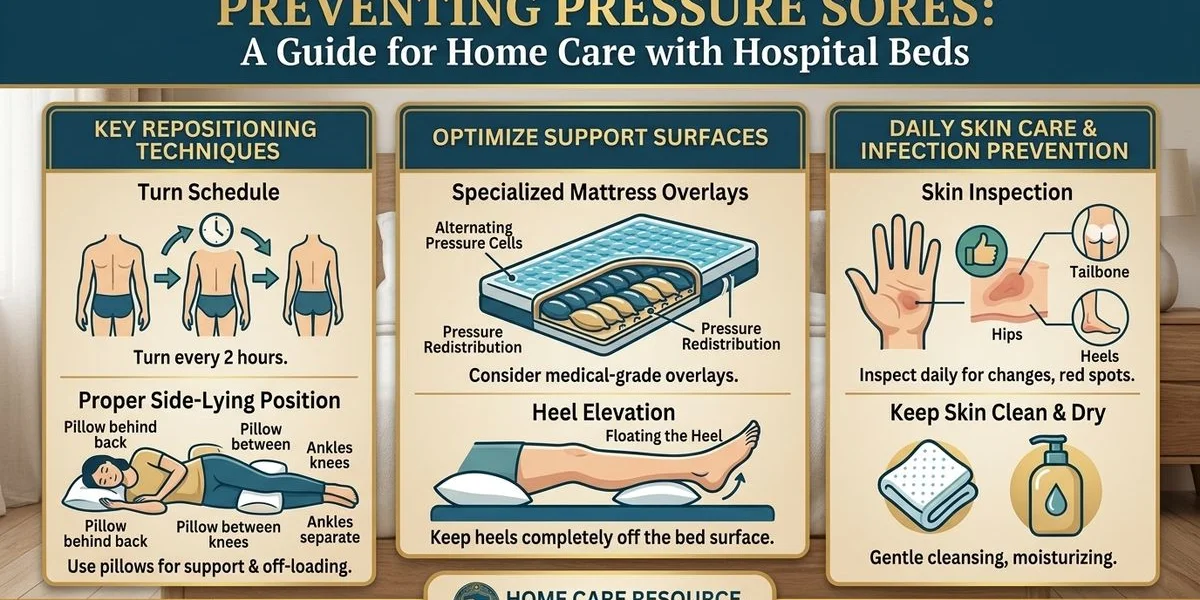
- Pressure sores resulting from immobility
- Inability to position the body comfortably for eating or breathing
Aging in Place: How a Hospital Bed Supports Independent Living for Seniors
Safe Bed Entry and Exit
The number one reason seniors fall is getting in and out of bed. The CDC’s 2026 update on older adult falls reveals that over 14 million adults aged 65 and older fall each year in the US, with more than 55 percent of these injuries occurring inside the home. A standard mattress sits at a fixed height that creates constant hazards, requiring either a difficult push-up to stand or a dangerous step-down.
Our clients often eliminate this risk completely by using adjustable height features. The patient sets the bed so their feet rest flat on the floor and their hips are at knee level, making standing up as easy as rising from a dining chair.
Hi-Lo adjustable beds offer the widest height range for these transfers. For maximum nighttime fall protection, ultra-low hospital beds add the distinct benefit of lowering to near-floor level.
Comfortable Positioning Without Help
Arthritis, acid reflux, and congestive heart failure all require specific sleeping positions for relief. Chronic Obstructive Pulmonary Disease (COPD) is particularly disruptive to sleep when lying flat.
The clinical standard for COPD sleep in the US is the Semi-Fowler’s position. This positioning elevates the head and upper body to a 30 to 45 degree angle while keeping the knees slightly bent to reduce the weight of abdominal organs pressing against the lungs.
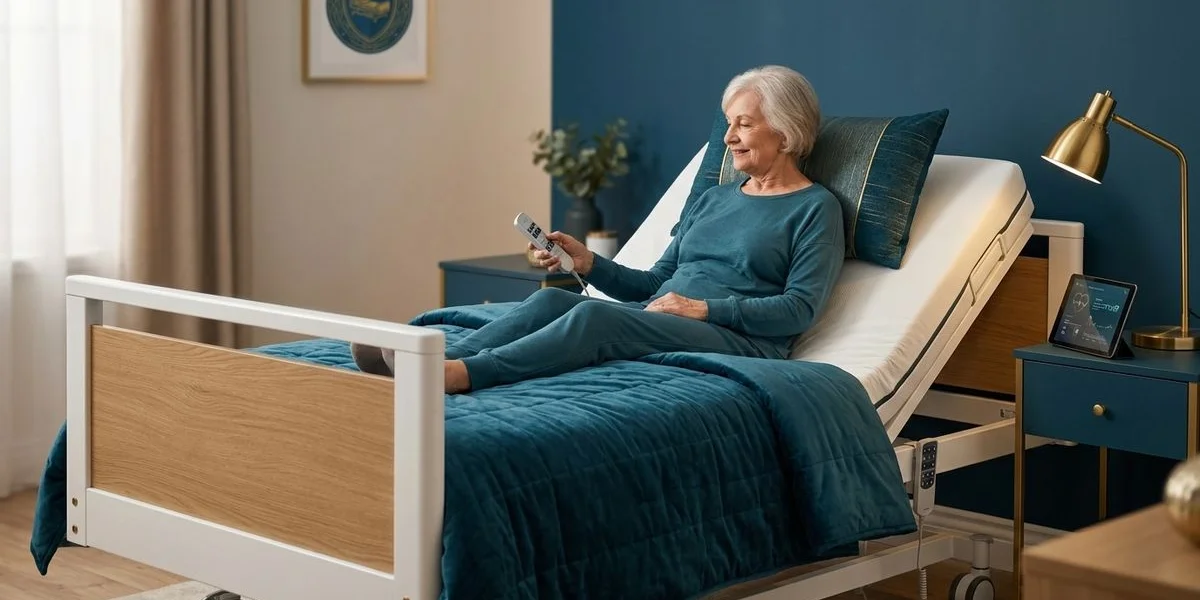
We see patients regain massive amounts of autonomy with electric head and foot adjustments. A senior can reach the Semi-Fowler’s position with the simple push of a button on the pendant control, which eliminates the need to call for a caregiver and preserves their self-esteem.
Fall Prevention Technology
Modern hospital beds incorporate advanced safety features that go far beyond standard home furniture. The FDA maintains strict guidelines for these components to prevent accidents.
We always warn families about the dangers of using incorrect mattresses with these beds. A standard Twin mattress measures 39 by 75 inches, which leaves a dangerous five-inch gap on a hospital bed frame. You must use a Twin XL mattress measuring 39 by 80 inches to eliminate entrapment risks between the mattress and the side rails.
When properly configured, these beds offer multiple layers of protection:
- Half-length assist rails: Spanning 18 to 36 inches, these provide a secure grab point for repositioning without acting as a restrictive cage.
- Ultra-low positioning: Dropping the frame reduces the height of a potential fall to just inches.
- Bed alarm sensors: These systems alert caregivers instantly when a patient attempts to exit unassisted.
- Locking casters: Heavy-duty locks prevent the bed from shifting during a wheelchair transfer.
For seniors with balance issues, these verified safety elements often mean the difference between a minor slip and a permanent move to a facility.
Activities of Daily Living (ADLs) and Hospital Beds
Geriatric care professionals rely on specific metrics to determine what level of support a senior needs. The Katz Index of Independence in Activities of Daily Living is the standard US assessment tool.
Our team uses these categories to explain exactly how equipment changes daily routines. This index scores a person from zero to six based on their ability to perform basic self-care tasks. A hospital bed directly improves a patient’s ability to maintain independence across several of these critical ADL categories.
Eating
Raising the head of the bed to a High Fowler’s position (60 to 90 degrees) creates a stable, upright posture for meals. This specific angle drastically reduces choking risks for seniors with swallowing difficulties.
Our favorite setup pairs this upright position with a sturdy overbed table. The patient can eat comfortably and independently without dropping food or straining their neck.
Dressing
A bed that raises to standing-transfer height makes getting dressed much easier and far safer. The patient can sit securely at the bed edge with both feet firmly on the floor.
They can then dress their upper body, stand briefly using the assist rail as support, and finish their routine. Without an adjustable frame, this simple daily task might demand full-time caregiver assistance.
Transferring
Every transfer from the bed to a wheelchair or bedside commode carries a high risk of injury. These movements become exponentially safer when the bed height perfectly matches the destination seat height.
We teach caregivers to use the bed’s electric controls to level the two surfaces before the patient moves. This matching technique eliminates the awkward reaching, twisting, and stumbling that cause most transfer-related falls.
Toileting
Nighttime bathroom trips are notoriously the most dangerous part of a senior’s day. Poor lighting, sleep inertia, and improper bed height create a perfect storm for accidents.
An adjustable bed positioned at the optimal exit height gives the senior a stable starting point. For individuals who cannot safely walk to the bathroom, pairing a bedside commode with the bed’s height adjustment creates a highly manageable and safe alternative.
Choosing the Right Bed for Aging in Place
Not every hospital bed suits every senior or every home environment. Finding the correct match requires assessing the patient’s mobility, weight, and clinical needs.
Our comparison chart breaks down the most common situations and their corresponding solutions:
| Senior’s Situation | Recommended Bed Type |
|---|---|
| Generally mobile, wants prevention | Fully-electric hospital bed |
| History of falls | Ultra-low hospital bed |
| Weight over 350 lbs | Bariatric hospital bed |
| Wants home aesthetics | Premium luxury hospital bed |
| Multiple chronic conditions | Hospital bed package with therapeutic mattress |
For a comprehensive comparison of features and sizing, read our complete buying guide. You can also explore our dedicated selection of beds for seniors designed specifically for aging-in-place needs.
Senior Resource Alliance and Local Support
Orlando-area seniors have access to excellent institutional support to complement their home equipment. The Senior Resource Alliance serves as the Area Agency on Aging for Orange, Osceola, Seminole, and Brevard counties.
We highly encourage families to leverage these regional programs to build a complete care plan. They directly administer essential initiatives like the SHINE program for health insurance counseling and CARES for long-term care assessments.
They also connect seniors with:
- Home modification programs
- Caregiver support services
- Nutrition programs like Meals on Wheels
- Transportation assistance
- Health and wellness programs
Pairing this strong institutional support with the right medical equipment creates a highly effective strategy that addresses both environmental and human needs.

Making the Transition
Many seniors resist the idea of a hospital bed in their home because it feels like an admission of decline. This is exactly where premium luxury hospital beds with residential styling make a massive psychological difference.
When the bed looks like a high-end piece of furniture rather than a sterile medical device, it is much easier to accept emotionally. Beyond the visual appeal, frame the bed as a specialized tool for independence rather than a sign of dependency.
It is a smart adaptation that lets a person keep taking care of themselves, just like reading glasses or a good pair of walking shoes.
Gradual Introduction
Consider introducing the hospital bed before an acute medical emergency makes it strictly mandatory.
Our team finds that a phased approach reduces anxiety and builds user confidence. Try these transition steps:
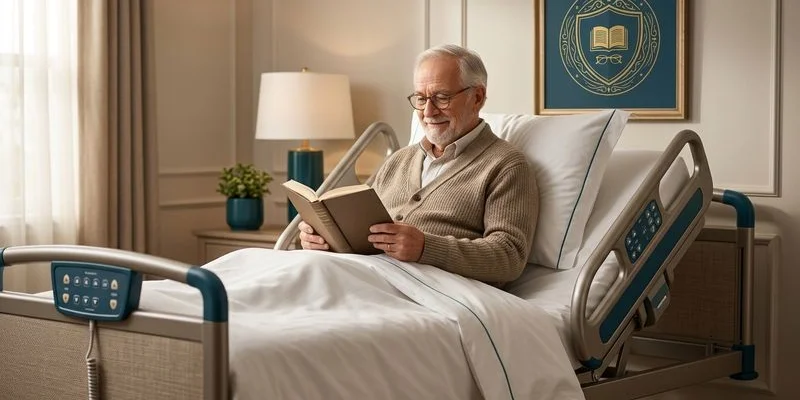
- Start with comfort features: Emphasize the adjustable head elevation for reading or watching TV.
- Highlight the convenience: Show how the pendant control is much easier than constantly restacking pillows.
- Demonstrate safety: Practice using the height adjustment to make getting in and out of bed effortless.
- Let the senior control the bed: True independence comes from having authority over your own environment.
The Financial Perspective
A hospital bed for home use typically costs between $1,200 and $5,000 depending on the specific type and technical features. This upfront cost might seem significant until you compare it to the alternative of facility care.
According to the 2026 Genworth Cost of Care Survey, assisted living costs in Florida average between $4,800 and $6,600 per month depending on the exact city. Even the most advanced premium hospital bed pays for itself entirely within the first month if it successfully delays a move to assisted living.
We frequently help families manage the financial side of this important investment. Read our guide on private pay versus insurance options and explore available financing plans to find a solution that fits your budget.
Getting Started
For step-by-step room preparation advice, read our guide on setting up a home recovery room. If your loved one is considering modifying their home, visit our Orlando showroom to test these beds in person. Trying the controls and feeling the mattress quality removes the guesswork from the purchasing process.
Our specialists understand the specific challenges that Orlando-area seniors face daily. You can rely on us to recommend the exact bed frame, mattress size, and safety accessories for your unique situation.
Understanding the logistics of aging in place, how a hospital bed supports independent living for seniors becomes incredibly clear. Equipped with the right tools and local support, staying home can be the smartest choice for quality of life, dignity, and family connection.